What the 2026 review found
When you’re preparing for in vitro fertilisation (IVF), your diary quickly fills up with medication schedules, follow-up appointments and egg collection. If you’re also considering acupuncture, should you start during ovarian stimulation or wait until just before embryo transfer? There is no established best time to start acupuncture for IVF. A 2026 review explored treatment timing and session numbers, but the evidence was too uncertain to identify an optimal schedule or confirm a live-birth benefit. Appointments should fit around your fertility clinic’s plan, rather than delay it.
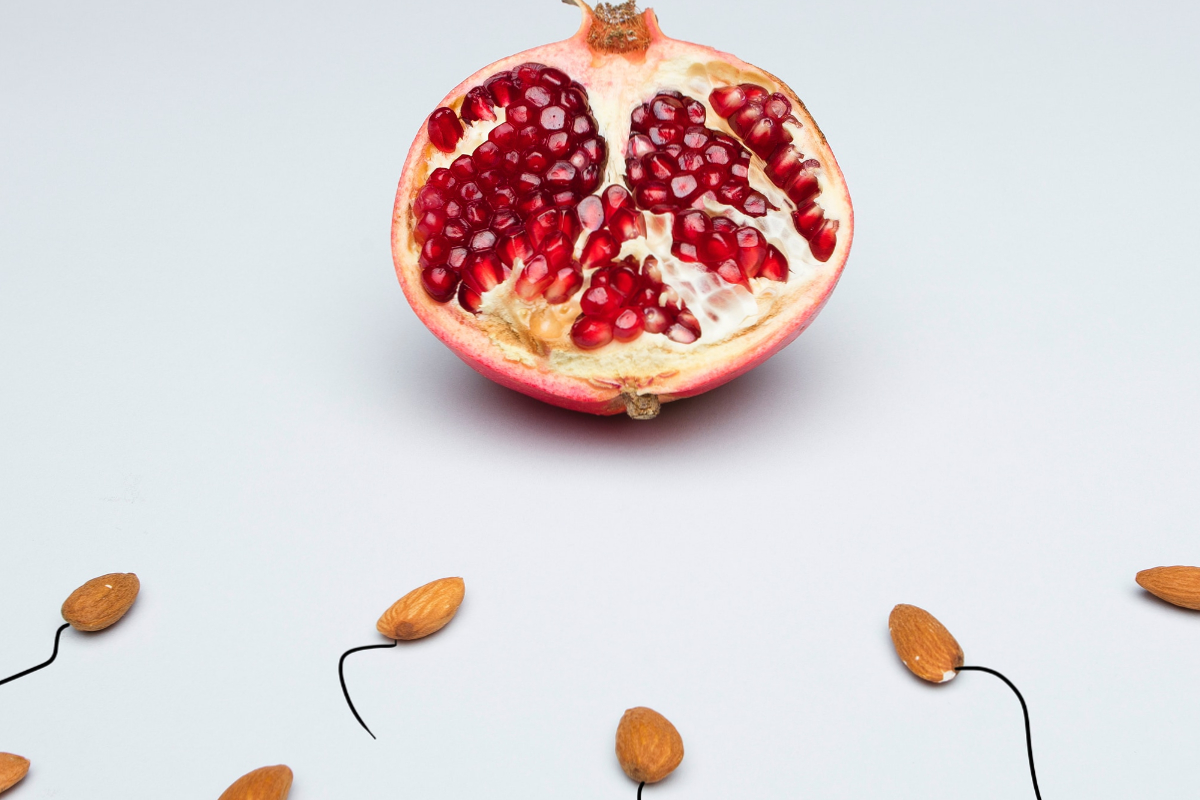
The Shanggu Tianzhen Lun chapter of the Suwen (Plain Questions), part of the Yellow Emperor’s Inner Classic, describes the maturation of female reproductive function in these terms: ‘Tian Gui arrives, the Ren channel opens and the Chong channel flourishes.’ It also describes how ‘the menses arrive at regular intervals’. In traditional Chinese medicine (TCM) gynaecology, the concept of the Kidneys storing essence helps explain the relationship between inherited constitution and reproductive development. The Liver is understood to store blood and govern the smooth flow of qi, which helps explain menstruation and the circulation of qi and blood. Inherited constitution, menstrual patterns and physical changes during pregnancy can vary from person to person. At conception, the question is whether a pregnancy can be established. Once it is established, attention turns to whether the developing embryo is adequately nourished and whether the pregnancy can continue. This is one way TCM understands differences between individuals. Modern IVF research uses ultrasound findings and birth records to assess these two stages, respectively. For more on the traditional background, see my article on fertility acupuncture points recorded in classical Chinese texts.
Why timing and session numbers are difficult to separate
Patients’ concerns also change as the cycle progresses. During ovarian stimulation, the questions at each follow-up appointment are often about how the follicles are developing, whether the medication dose will change and when egg collection is likely to take place. Around embryo transfer, attention shifts to the embryo and the arrangements for the procedure. When will it happen? How should I prepare on the day? Can I carry on as usual once I get home? During the wait for a pregnancy test after transfer, a little bloating or light bleeding can leave you wondering what it means. Feeling nothing at all can be just as worrying. These symptoms offer little indication of whether the embryo has implanted, so take the pregnancy test on the date your fertility centre gives you. Some people consider acupuncture because they want a chance to unwind during the busy stimulation phase. Others hope it will ease their anxiety about the procedure. Wei and colleagues found that the estimated effects on clinical pregnancy and live birth were generally more favourable when acupuncture was given during ovarian stimulation, or from stimulation through to embryo transfer, than when it was given only around the time of transfer.
Several earlier reviews of acupuncture and IVF provide further context. Xu and colleagues reported higher clinical pregnancy and live birth rates. Fu and colleagues found a higher clinical pregnancy rate, as well as some relief from pain and anxiety associated with egg collection. Wang and colleagues observed more favourable outcomes when acupuncture was given during ovarian stimulation in fresh IVF cycles and before frozen embryo transfer. Another review, focusing on patients with a poor ovarian response, found that the main difference was in the number of eggs collected. I’ve also written about a separate study of whole-systems Chinese medicine alongside IVF, which looked at acupuncture as part of a broader approach.
So why can’t the research give us an ideal number of sessions that suits everyone? In the model used in the 2026 paper, the predicted clinical pregnancy rate was highest at 10 sessions within the range assessed. For live birth and ongoing pregnancy, the model predicted peaks at different numbers of sessions. These peaks were estimated by pooling data from several trials. The trials used different types of acupuncture, started at different stages and varied in how often sessions were given. There were also fewer data on courses involving more sessions. Even with the same total of 10 sessions, spacing them out from the start of ovarian stimulation is a different schedule from concentrating them in another phase. Participants also varied in age, ovarian reserve and the type of embryo transfer they had. The pooled findings can suggest which session numbers are worth studying further, but they cannot yet establish the best course for individual patients.
What this means for your IVF appointments
So when should you start? In terms of improving the chances of a live birth, the study has yet to establish an ideal start date or number of sessions. TCM offers a way to understand why care is tailored to the individual. In TCM theory, the Kidneys store essence, which is inherited from one’s parents and replenished by the nourishment derived from food and drink throughout life. As Kidney essence and qi become more abundant, Tian Gui arrives, the Chong and Ren channels become active and abundant, periods settle into a regular pattern and reproductive function matures. People differ in their inherited constitution, as well as in their diet, daily habits and medical history. Even when two people are the same age and both have late periods, TCM practitioners assess them by looking at their usual menstrual patterns and broader symptoms.
For someone who usually has light periods and often feels aching and weakness in the lower back and knees, a TCM practitioner may consider Kidney essence deficiency and insufficient nourishment of the Chong and Ren channels. For someone whose periods are irregular and who tends to have breast tenderness or discomfort around the ribs before a period, the practitioner may consider Liver qi stagnation and impaired flow of qi. Both patterns can occur together as Kidney deficiency with Liver qi stagnation. Nourishing the Liver and Kidneys takes patience because practitioners look at how cycle length, menstrual flow and premenstrual discomfort change over time. In TCM theory, prolonged emotional strain can impair the Liver’s ability to keep qi flowing smoothly. This can lead to stagnation and affect the circulation of qi and blood and the coordination of the Chong and Ren channels. People can respond differently to the same wait for a follow-up appointment, an embryo transfer or a pregnancy test. Some find it hard to sleep, while others already experience premenstrual tenderness that becomes more noticeable under stress. A TCM assessment considers how long these changes have lasted, whether they recur at the same point in the menstrual cycle and what other symptoms accompany them.
It’s a little like preparing the soil before planting flowers. Soil in one pot may compact easily and need loosening. Soil in another may dry out quickly and need gradual improvements to help it hold moisture. Looking at the soil first helps you decide how to tend it and see what changes over time. Patience in TCM care means taking the time to understand your own situation and observe how it changes. IVF follows the schedule set by your fertility centre, and acupuncture appointments can be adjusted around it. Give yourself time, allow yourself to feel anxious while you wait, and follow the plan you’ve agreed on one step at a time. If you’re preparing for IVF or already in a cycle and would like to discuss where acupuncture might fit, you can read more about fertility and IVF acupuncture at my Chelsea practice or book a 55-minute fertility acupuncture appointment.
References
Wei J, Wang Y, Zhang K, Shen Z, Li J, Guan H, Wang J. Timing and dose of acupuncture as adjuncts to assisted reproduction: a meta-analysis and model-based network meta-analysis. Front Endocrinol (Lausanne). 2026 Jul 9;17:1880225. doi: 10.3389/fendo.2026.1880225. PMID: 42494870; PMCID: PMC13391303.
Wang X, Xu HM, Wang QL, Zhu XY, Zeng YM, Huang L, Feng X, Chen S. The Timing and Dose Effect of Acupuncture on Pregnancy Outcomes for Infertile Women Undergoing In Vitro Fertilization and Embryo Transfer: A Systematic Review and Meta-Analysis. J Integr Complement Med. 2024 Nov;30(11):1031-1046. doi: 10.1089/jicm.2023.0478. Epub 2024 May 29. PMID: 38808509.
Xu, M., Zhu, M. & Zheng, C. Effects of acupuncture on pregnancy outcomes in women undergoing in vitro fertilization: an updated systematic review and meta-analysis. Arch Gynecol Obstet 309, 775–788 (2024). https://doi.org/10.1007/s00404-023-07142-1