Pain & recovery
Acupuncture for pain and recovery in Chelsea
Pain is rarely confined to the place that hurts.
Private, one-to-one acupuncture in Chelsea for persistent musculoskeletal pain and recovery after injury, surgery or prolonged strain — complementary care that works alongside physiotherapy, rehabilitation and medical treatment.
Who this is for
When something has not settled the way it should have.
Most people arrive after the acute phase has passed — when the scan was clear, the exercises were done, and it still hurts.
- Persistent lower back pain, including sciatica and pain referred down the leg
- Neck and shoulder pain, frozen shoulder, and stiffness that has stopped responding to stretching
- Hip, knee and elbow pain, including tendinopathy and tennis elbow
- Osteoarthritis pain in the knees, hips or hands
- Pain that has become chronic, or that keeps returning to the same place
- Recovery after injury, surgery or a long period of reduced activity
- Sports injuries, and the accumulated strain of training through a demanding schedule
- Myofascial and tension-related pain, and repetitive strain from desk work and long hours
- Plantar fasciitis and other persistent foot or ankle pain
- Headaches or migraines with a neck or jaw component
- Pain that is now affecting sleep, movement or how you get through the day
Many people also come wanting to rely less on painkillers while staying under medical care. That is a reasonable goal to work towards — but any change to prescribed medication is a decision for your doctor, not for this clinic.
The approach
Reading the structure, not just the sore spot.
Two things shape how pain is treated here: two years in a hospital orthopaedics unit in China, and years of study in the structural method of the Taiwanese physician Lin Liang-Chuan.
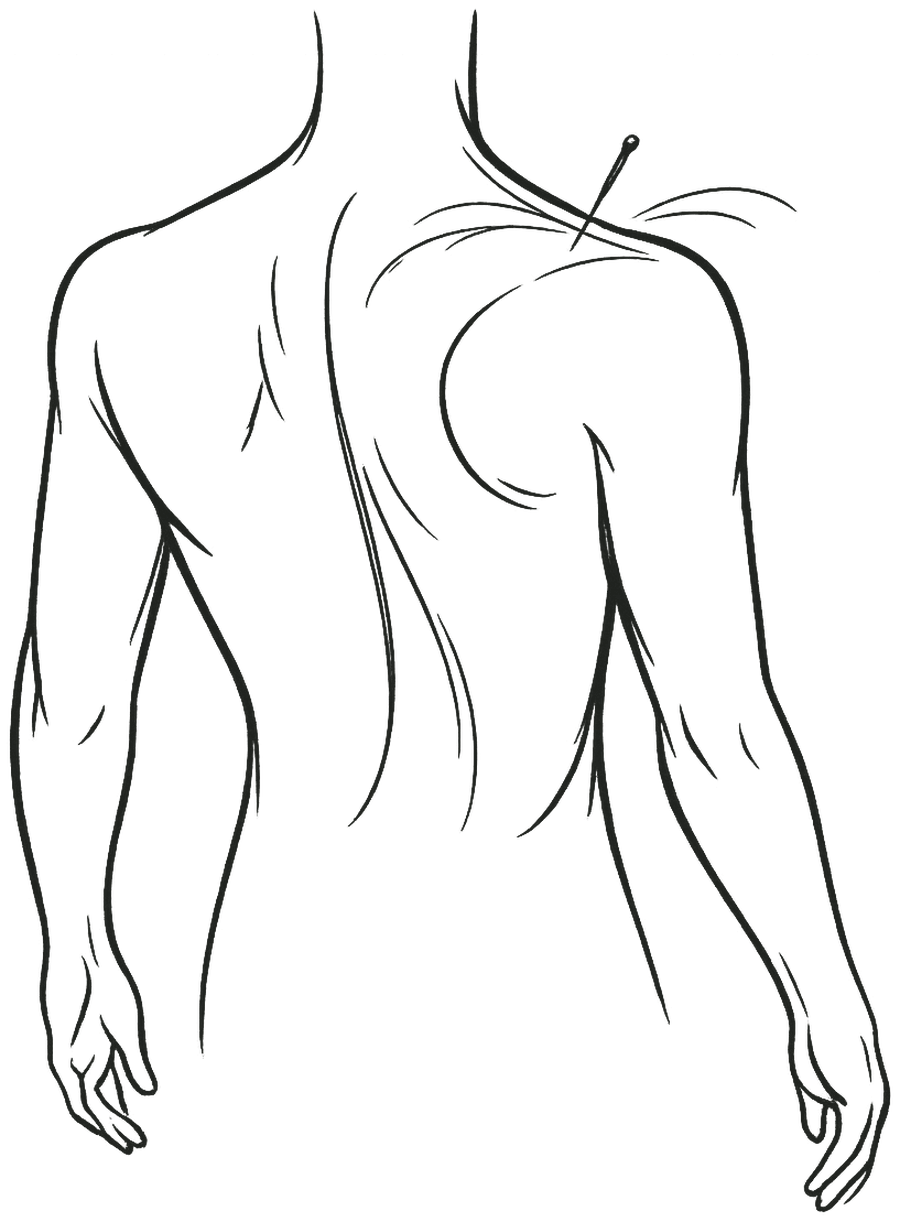
That method reads the body's fascia, joints and skeletal alignment as one continuous, tension-bearing system. A painful shoulder is examined alongside the ribcage and neck that position it; a stubborn low back is considered together with the hips and the way weight is being carried. It is why treatment often involves needling somewhere other than the place that hurts, and why people frequently describe the result as the area finally being able to let go rather than simply being numbed.
The needling itself is precise and economical — few needles, chosen deliberately. Read about the lineages behind the practice.
Your care pathway
A clear process, judged on function.
Four stages, reviewed openly at the end rather than rolled into an open-ended course.
- 01
Understand
History, imaging and investigation results, what aggravates and eases it, and what you actually need to get back to.
- 02
Assess structure
Examination of movement, tissue tension and how the area is being compensated for — pain is rarely confined to where it hurts.
- 03
Treat
Acupuncture aimed at pain modulation, tissue recovery and restoring ease of movement, adapted at each visit.
- 04
Review
Progress judged against function, not just sensation, with treatment adjusted, spaced out or referred on accordingly.
How it may help
Four mechanisms under study.
Pain is where acupuncture's evidence base is strongest and its mechanisms best understood. What follows is what research has examined — context, not a promise about your outcome.
- 01
Pain modulation
Needling activates sensory nerves and engages the body’s own pain-modulating systems, including endogenous opioids and adenosine pathways — the most thoroughly studied part of how acupuncture affects pain.
Best-established evidence - 02
Local tissue response
The needle’s gentle grip on connective tissue produces measurable local changes in circulation and fibroblast activity, part of the tissue’s own repair signalling.
Observed in tissue studies - 03
Central processing
Persistent pain involves changes in how the nervous system processes signals, not only the state of the tissue. Acupuncture is studied for its effects on that central processing.
An active area of research - 04
Sleep and tolerance
Pain that disturbs sleep tends to worsen; better rest and a calmer stress response often make rehabilitation exercises more tolerable.
Supports recovery
These effects are complementary: they support recovery and function alongside physiotherapy and medical care, rather than replacing either. Read more about how acupuncture works.
What the research shows
The evidence, stated plainly.
Pain is the area in which acupuncture has been most closely studied. These are the four bodies of evidence that matter most, summarised as they stand.
-
Chronic pain overall
The Acupuncture Trialists' Collaboration pooled raw data from around 20,000 patients across high-quality trials, finding acupuncture superior to both sham and no-acupuncture control for musculoskeletal pain, headache and osteoarthritis — with effects that persisted rather than fading once treatment ended.
Vickers AJ et al. · The Journal of Pain, 2018 -
Low back pain
A systematic review and meta-analysis compared acupuncture with usual care — physiotherapy, exercise, education and medication — in adults with chronic low back pain, reporting benefits for pain and function in the immediate and intermediate term.
Systematic review · SICOT-J, 2025 -
Neck pain
Eighteen randomised trials pooled: acupuncture used as an adjunct provided sustained relief at three and six months. Stated honestly, against sham acupuncture the difference was not statistically significant — a limitation that runs through much of this literature, and one reason the framing here is support for recovery rather than cure.
Systematic review · Current Pain and Headache Reports, 2024 -
Recovery after surgery
Twenty-five studies on postoperative pain were pooled, reporting lower pain scores and reduced analgesic requirements when acupuncture was used as an adjunct to standard care.
Meta-analysis · Journal of PeriAnesthesia Nursing, 2025
All references are listed at the end of this page.
Alongside your care
Designed to fit around physiotherapy, not compete with it.
Acupuncture and physiotherapy do different jobs. One tends to reduce pain and tension; the other rebuilds capacity. They work well in sequence.
In practice, sessions are often timed so that treatment lands before or between physiotherapy appointments, when reduced pain makes the exercises more tolerable and the gains more likely to stick. With your consent, Phoebus will write a brief note to your physiotherapist, GP or consultant on treatment focus and progress.
Where a presentation falls outside acupuncture's remit — or where red-flag symptoms appear — he refers back promptly rather than continuing to treat. Information for GPs and clinicians.
What to expect
A full assessment before any needle.
The first appointment is a 90-minute initial consultation and treatment: history, examination of movement and structure, review of any imaging you bring, then treatment in the same visit.
Follow-up sessions are 55 minutes. Where clinically appropriate, sessions may include moxibustion, cupping, gua sha or LED light at no additional cost — chosen for the presentation, not added as a package. Needles are sterile and single-use.
Wear or bring comfortable clothing that allows the affected area to be examined and moved. View fees & appointment guidance.
In Chelsea & Knightsbridge
Convenient for clinics, gyms and long working weeks.
The clinic is at Roscop Practice, 33B Beauchamp Place, Chelsea SW3 — five minutes from Knightsbridge station and a short walk from South Kensington.
It is within easy reach of the physiotherapy practices, sports clinics and hospitals of Chelsea, Knightsbridge and Sloane Street, which makes it practical to arrange treatment on the same day as a physiotherapy or consultant appointment. Evening times on Tuesdays and Fridays until 8pm, plus Saturdays, suit people who cannot take a working day out. Clinic details & directions.
Frequently asked questions
Practical answers before you book.
General information, not personal medical advice. Diagnosis of the cause of pain remains with your GP or specialist.
Can acupuncture be used alongside physiotherapy or medication?
Yes — this is the most common way it is used here. Acupuncture can make rehabilitation exercises more tolerable and is often timed around your physiotherapy sessions. Please tell both Phoebus and your other practitioners about all treatment you are receiving; with your consent he is glad to communicate directly with them.
Can acupuncture help with sciatica?
Sciatica — pain referred along the sciatic nerve, usually originating in the lower back — is one of the more common reasons people come here. Treatment considers the lumbar spine, pelvis and hip together rather than the leg alone, because what is driving the pain is rarely where the pain is felt. A course is usually around six to eight sessions, reviewed honestly against how far and how comfortably you can move rather than sensation alone. Sciatica accompanied by significant leg weakness, numbness around the saddle area, or any change in bladder or bowel control needs urgent medical assessment first.
Do you treat sports injuries?
Yes — usually at the point where the acute phase has passed and something still is not right: a hamstring that keeps tightening, a shoulder that has lost range, an ankle that has never quite felt the same. The structural approach suits these presentations because it examines what the rest of the body is doing to compensate. Acupuncture sits alongside physiotherapy and strength rehabilitation rather than replacing them, and an acute injury should be properly assessed before any treatment here.
How many sessions will I need?
It depends on how long the pain has been present and what is driving it. Recent strains often settle in a handful of sessions; long-standing pain usually needs a course of around six to eight, reviewed honestly at the end. You will not be asked to commit to an open-ended programme.
Is acupuncture suitable for pain after surgery?
Often yes, once the acute surgical phase has passed and with the agreement of your surgical team. It is used as part of a wider recovery plan rather than as a treatment for the surgical site itself. Bring your discharge summary and any restrictions you have been given.
Does it help tension-related or myofascial pain?
This is one of the most common presentations seen here — particularly neck, shoulder and back pain in people who work long hours at a desk. The structural approach used in the clinic is well suited to it, because it looks at how the whole system is compensating rather than only at the painful spot.
Do I need a scan or a diagnosis before coming?
No, but bring any imaging or reports you already have — they are discussed as part of the assessment. Where a presentation suggests something that needs investigating first, Phoebus will say so and direct you to your GP rather than treat around it.
When is acupuncture not appropriate?
Suspected fracture, infection, unexplained or rapidly worsening pain, or neurological signs such as significant weakness, numbness or loss of bladder or bowel control require urgent medical assessment first. These take priority absolutely; acupuncture is offered only when it is clinically appropriate.
Sudden severe pain, pain following significant trauma, or symptoms such as significant weakness, numbness, fever, or loss of bladder or bowel control need urgent medical assessment — contact your GP, NHS 111, or 999 in an emergency. Acupuncture is not emergency care.
About the practitioner
Written and reviewed by Phoebus Tian.
Phoebus Ye Tian, BMed, MBAcC — acupuncturist, Chinese medicine practitioner and former clinical lecturer.
Phoebus completed a five-year medical degree in acupuncture and tuina at Heilongjiang University of Chinese Medicine — including full training in anatomy, physiology, pathology and clinical medicine — qualified as a licensed doctor of Chinese medicine in China, and spent two years in a hospital orthopaedics unit. He is a member of the British Acupuncture Council (MBAcC), taught at London South Bank University, and authored the "Moxibustion" chapter in Springer's Acupuncture Techniques: A Practical Manual (2024).
References
Selected research, by theme.
Peer-reviewed meta-analyses on acupuncture for chronic pain, back and neck pain and postoperative recovery, for those who like to read the evidence for themselves.
Chronic pain overall
- Vickers AJ, et al. (2018). Acupuncture for chronic pain: update of an individual patient data meta-analysis. The Journal of Pain. View
Low back pain
- Systematic review & meta-analysis (2025). Acupuncture vs usual care for chronic low back pain: immediate and intermediate effects. SICOT-J. View
Neck pain
- Systematic review & meta-analysis (2024). Durable effect of acupuncture for chronic neck pain. Current Pain and Headache Reports. View
Recovery after surgery
- Systematic review & meta-analysis (2025). Efficacy of acupuncture in postoperative pain-relieving. Journal of PeriAnesthesia Nursing. View
Start with a proper assessment.
Appointments take place privately at Roscop Practice, 33B Beauchamp Place, Chelsea SW3. Bring any imaging or reports you have.
Book an appointment