Many people feel loose and lighter immediately after acupuncture, but pain after acupuncture the next day also happens, waking up the next morning feeling more achy, distended, or even finding the pain more distinct. This reaction is not uncommon when treating pain-related issues. Large-scale prospective surveys show that while transient local reactions after treatment, such as slight pain, bleeding, or bruising, are common, a temporary exacerbation of existing symptoms is also recorded in a certain percentage of cases.
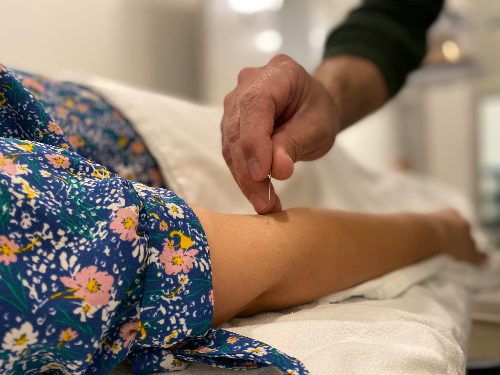
Pain after Acupuncture
Inserting a needle into soft tissue, combined with manipulations like lifting, thrusting, or twisting, is essentially a controlled local disturbance. You can think of it as a very mild micro-injury: when tissue is touched and stretched, it releases a series of damage-related signals. Local immune cells are activated, and blood flow and cytokines are marshalled to the area. This process is known as sterile inflammation—inflammation where no bacterial infection is involved, but the body still initiates a repair programme. (Yu et al., 2023) Reviews on acupuncture mechanisms specifically discuss the changes in the local micro-environment and immune cells following needling; the logic is that the needle first alters the local area before influencing broader regulation via neuro-immune pathways. This explains why some people experience sensations like swelling, distension, and pain the next day, which feel more like an inflammatory peak: it is not getting worse, but rather the repair process becoming more perceptible to you. Post-treatment soreness is thought to be related to mild neuromuscular damage caused by the needle, local bleeding, and the inflammatory response, and most of this will subside on its own within 72 hours. (Martín-Pintado-Zugasti et al., 2018)
Areas with Adhesions and Calcification are More Prone to Delayed Reactions
If the needling targets fascial adhesions, knot-like tightness, or suspected calcification, you are more likely to feel achier and more sore the next day, as these areas do not glide easily to begin with. When the needle is twisted, the soft tissue creates a stronger mechanical coupling with the needle, increasing resistance upon withdrawal. This traction is more like forcefully waking up layers that have been stuck together for a long time, making them start moving again. Consequently, while you might feel loosened up on the day, the next day can feel as acid and distended as if you had undergone deep tissue release or intense stretching.
Neural Sensitisation Brought on by Acupuncture
The sensations of soreness, numbness, and distension during acupuncture correspond to the combined perception of different types of afferent fibres being activated. Research puts this quite plainly: numbness tends to relate to faster Aβ fibres; heavy, full sensations relate to slower Aδ fibres; while deep sensations like soreness, dull pain, or warmth often involve Aδ and C fibres. (Yang et al., 2013) In other words, 'De Qi' (the arrival of Qi) often means the stimulation intensity is sufficient for the nervous system to take the area seriously. Against a background of long-term adhesions or chronic pain, it is easier to understand the sensitisation felt the next day: chronic issues are often accompanied by threshold changes and upregulated excitability. Once peripheral input becomes stronger, sensation can be amplified in the short term. Studies on acupoint sensitisation have even observed that in disease states, stimulating these sensitised points is more likely to induce C-fibre discharge and lower thresholds, indicating that the same stimulus is more easily processed as a strong signal. (Cui et al., 2022) So, for some, areas that felt numb or dull may feel 'alive' after needling, with pain becoming distinct. This is not a contradiction; it is more like the nervous system retuning a previously fuzzy input into a clear mode.
The Pain from a Changed Local Chemical Environment
Because local metabolic waste (such as lactic acid and pain-inducing substances) is released into the surrounding tissue and has not yet been completely metabolised away, the area may feel more sensitive or painful the next day than it did before treatment. Human microdialysis studies have detected lower pH in trigger point regions, along with elevated levels of bradykinin, substance P, CGRP, TNF-α, IL-1β, IL-6, IL-8, and 5-HT—various mediators related to pain and inflammation. This means that the patch of tissue is already more prone to translating stimulation into pain. (Shah et al., 2008) When needling restarts local circulation, you might experience loosening in the moment, but the next day, you may also experience soreness and stinging as these chemical signals make fuller contact with receptors. Needling does indeed alter chemical and circulatory signals at a local level; for instance, research shows acupuncture can raise nitric oxide levels in the treated area and increase local circulation, changes correlated with increased blood flow. (Tsuchiya et al., 2007) Other studies have observed that needling can trigger a local rise in adenosine, participating in analgesia via adenosine A1 receptors. This demonstrates that acupuncture triggers measurable local signal changes, rather than being solely a psychological experience. Precisely because it genuinely pushes tissue into repair and rearrangement, temporary aggravation appears repeatedly in clinical practice. (Goldman et al., 2010) Overall, acupuncture is still considered a relatively safe treatment; serious adverse events are rare, and mild, transient, self-limiting reactions are more common.
If you feel achier and more distended 24 to 48 hours after treatment than you did on the day, simply treat it as a fleeting echo of the peak repair period. Do not be in a hurry to label yourself as 'getting worse with treatment'. However, if significant pain persists beyond this time window, or becomes increasingly sharp and is accompanied by abnormal redness, swelling, fever, or numbness and weakness, contact your practitioner directly so they can adjust the stimulation intensity, needling technique, and treatment pace based on your reaction.
Reference:
MacPherson, H., Thomas, K., Walters, S., & Fitter, M. (2001). A prospective survey of adverse events and treatment reactions following 34,000 consultations with professional acupuncturists. Acupuncture in medicine : journal of the British Medical Acupuncture Society, 19(2), 93–102. https://doi.org/10.1136/aim.19.2.93
Yu, W. L., Park, J. Y., Park, H. J., & Kim, S. N. (2023). Changes of local microenvironment and systemic immunity after acupuncture stimulation during inflammation: A literature review of animal studies. Frontiers in neurology, 13, 1086195. https://doi.org/10.3389/fneur.2022.1086195
Yang, X. Y., Shi, G. X., Li, Q. Q., Zhang, Z. H., Xu, Q., & Liu, C. Z. (2013). Characterization of deqi sensation and acupuncture effect. Evidence-based complementary and alternative medicine : eCAM, 2013, 319734. https://doi.org/10.1155/2013/319734
Shah, J. P., Danoff, J. V., Desai, M. J., Parikh, S., Nakamura, L. Y., Phillips, T. M., & Gerber, L. H. (2008). Biochemicals associated with pain and inflammation are elevated in sites near to and remote from active myofascial trigger points. Archives of physical medicine and rehabilitation, 89(1), 16–23. https://doi.org/10.1016/j.apmr.2007.10.018
Cui, X., Liu, K., Gao, X., & Zhu, B. (2022). Advancing the Understanding of Acupoint Sensitization and Plasticity Through Cutaneous C-Nociceptors. Frontiers in neuroscience, 16, 822436. https://doi.org/10.3389/fnins.2022.822436
Tsuchiya, M., Sato, E. F., Inoue, M., & Asada, A. (2007). Acupuncture enhances generation of nitric oxide and increases local circulation. Anesthesia and analgesia, 104(2), 301–307. https://doi.org/10.1213/01.ane.0000230622.16367.fb
Goldman, N., Chen, M., Fujita, T., Xu, Q., Peng, W., Liu, W., Jensen, T. K., Pei, Y., Wang, F., Han, X., Chen, J. F., Schnermann, J., Takano, T., Bekar, L., Tieu, K., & Nedergaard, M. (2010). Adenosine A1 receptors mediate local anti-nociceptive effects of acupuncture. Nature neuroscience, 13(7), 883–888. https://doi.org/10.1038/nn.2562