Understanding acupuncture
How does acupuncture work?
What acupuncture is — and what actually happens in your body.
A plain-language guide from a practitioner who trained in China, worked in hospital medicine and teaches the subject: the classical framework, the physiology, and an honest reading of the evidence.
Two ways of describing one practice
A classical map. A modern mechanism.
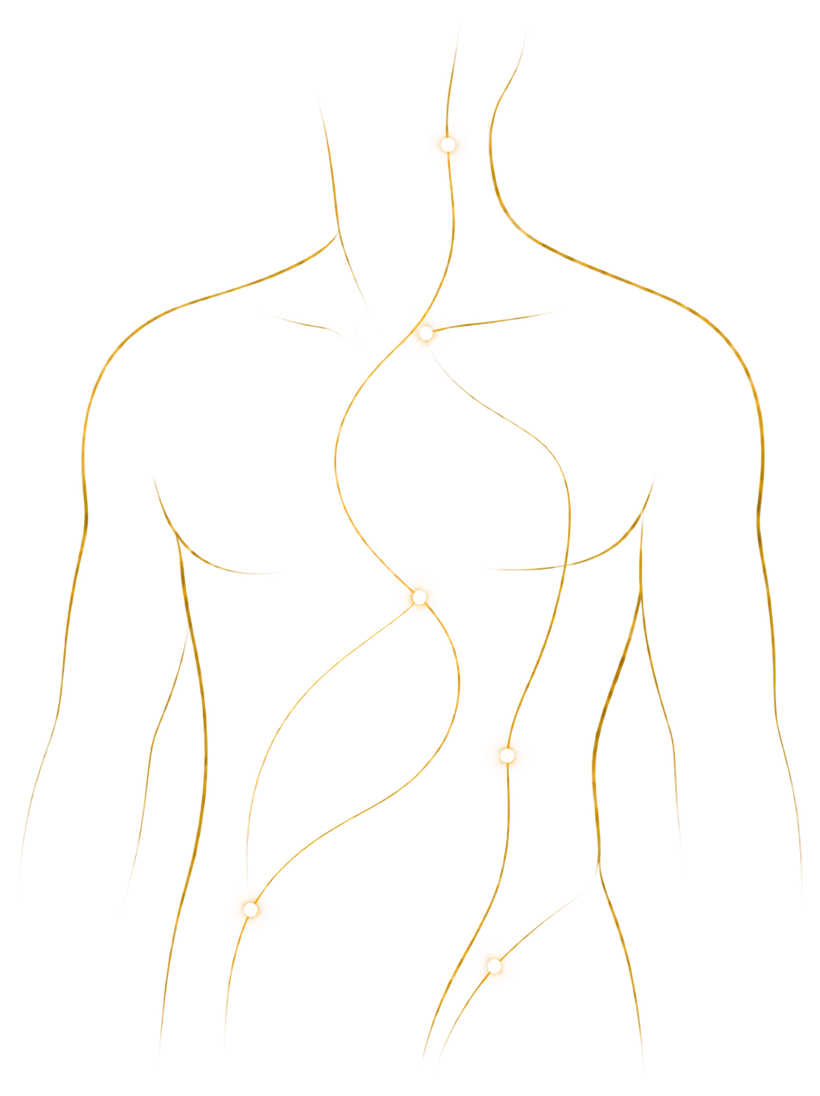
Chinese medicine describes the body through channels — meridians — along which its functions are connected and balanced. Acupuncture points are locations on that map where treatment can influence the system.
Modern research describes the same practice in different language: fine needles stimulate sensory nerves and local tissue, and the nervous system responds. Both descriptions guide the same hands. In practice, the classical framework informs where and why points are chosen; physiology explains part of what happens next. Neither needs to be exaggerated for acupuncture to be useful — and at this practice, neither is.
The physiology
Four responses researchers can measure.
Real, measurable effects on the body — the physiology behind why acupuncture helps so many people feel better.
- 01
Sensory nerve signalling
Needling activates peripheral sensory nerves. Signals travel to the spinal cord and brain, where they influence how pain and bodily sensations are processed — one reason pain is the most-researched application.
- 02
Neurochemical responses
Studies have recorded changes in endogenous opioids and other signalling molecules after acupuncture — the body’s own pain-modulating and mood-related chemistry.
- 03
Autonomic regulation
Researchers are examining how acupuncture affects the balance between sympathetic (alert) and parasympathetic (rest) activity, which may relate to the deep relaxation many people feel during treatment.
- 04
Local tissue responses
At the needle site, local blood flow and connective tissue respond measurably. These local effects are real; how far they explain clinical outcomes is still being studied.
The evidence, plainly
Well-evidenced for pain, and valued far more widely.
The research base is strongest for pain — chronic pain, headache and migraine — where UK NICE guidance includes acupuncture among recommended options.
Across sleep, stress, fertility support and digestive wellbeing, the research is still growing, while generations of patients turn to acupuncture for exactly these reasons. You will always get a clear, informed picture of how acupuncture can help your situation, care is reviewed as you go, and if another form of care would serve you better, you will hear that too.
Common questions
Asked before almost every first appointment.
General information, not personal medical advice. Urgent or worsening symptoms need medical assessment first.
What is acupuncture?
Acupuncture is a therapy from Chinese medicine in which very fine, sterile, single-use needles are placed at specific points on the body. In classical terms the points sit on channels (meridians) used to describe how the body’s functions relate to each other; in physiological terms, needling stimulates sensory nerves and local tissue, producing measurable responses in the nervous system.
Does acupuncture hurt?
Acupuncture needles are far finer than injection needles. Insertion may produce a brief pinch or a dull, spreading sensation that practitioners regard as part of the treatment. Most people find sessions relaxing, and many fall asleep during them.
Is acupuncture safe?
In the hands of a properly trained practitioner using sterile single-use needles, acupuncture has a good safety record. Side effects, when they occur, are usually minor and short-lived — slight bruising or tiredness after a session. Tell your practitioner about medical conditions, medicines and pregnancy so treatment can be adapted.
What does the evidence say?
The research base is strongest for pain: NICE guidance in the UK includes acupuncture among options for chronic primary pain and for migraine prevention. Across other areas the research continues to grow, and people have valued acupuncture for these concerns for generations. You will always get a clear picture of how it can help your situation, and honest review of whether it is helping.
How many sessions will I need?
It depends on the condition, how long you have had it, and how you respond. A plan and review points are agreed at the first appointment — chronic conditions usually need a course rather than a single visit, and treatment should be reassessed rather than continued open-endedly.
Go deeper
Recent writing from the Journal.
- Lìqiū: Autumn Begins Read article
- New Imaging Study Shows Real-Time Evidence of Acupuncture Calming an Overactive Immune Response Read article
- Why Gen Z has suddenly brought traditional Chinese wellness back into the mainstream Read article
References
Selected sources, by theme.
Authoritative overviews and peer-reviewed research on how acupuncture works — grouped by mechanism, for those who like to read the evidence for themselves.
Authoritative overviews
Pain relief & neurochemistry
Neuro-immune & anti-inflammatory
- Li N, et al. (2021). The anti-inflammatory actions and mechanisms of acupuncture from acupoint to target organs via neuro-immune regulation. Journal of Inflammation Research. View
The best way to understand acupuncture is a well-explained first session.
Begin with a consultation at Roscop Practice, 33B Beauchamp Place, Chelsea SW3.
Book an appointment