
The Essential Conflict Between Acupuncture and Dry Needling: A Case of Packaged Appropriation
- Phoebus Tian

- Jan 6
- 11 min read
Acupuncture’s Global Rise
Traditional acupuncture has long since crossed national borders and become part of healthcare systems worldwide. Reports published by the World Health Organization show that Chinese medicine acupuncture has now spread to 183 countries and regions, and that more than 100 WHO Member States have explicitly recognised the use of acupuncture. Among these countries, at least 29 have enacted laws and regulations relating to acupuncture, and 18 have incorporated acupuncture into medical insurance systems. Taking the United States as an example, acupuncture has obtained legal status in 44 states and has been incorporated into the scope of integrative medicine and healthcare; the number of licensed acupuncturists in the United States has exceeded 45,000, and around 5,000 Western medical doctors have also obtained acupuncture practice qualifications through training. In 2010, UNESCO further inscribed Chinese acupuncture on the Representative List of the Intangible Cultural Heritage of Humanity, affirming acupuncture’s rich philosophical foundations, such as theories of qi and yin and yang, and its unique value to global health. These data and measures indicate that acupuncture, as a treasured element of traditional medicine originating in China, is increasingly recognised worldwide, and its safety and effectiveness are continually being verified through modern research. Behind the flourishing development of acupuncture around the world are patients’ demand for natural therapies in different countries, as well as the reputation earned by acupuncture’s own efficacy and safety record. However, precisely because its global reputation is rising, some people have begun to attempt to rename and commercialise this ancient skill, seeking to take a share of the market without undergoing complete training in Chinese medicine. Against this backdrop, dry needling, as a needling technique carried under the banner of Western medicine, has gradually emerged, triggering intense controversy between the acupuncture community and other practitioner groups.
The definition of dry needling
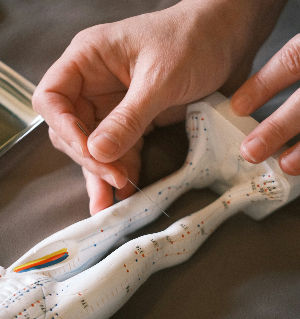
So-called dry needling, taken literally, refers to a form of needling therapy in which no medicinal liquid is injected, in contrast to wet needling, which requires the injection of drugs. In the mid-twentieth century, Western doctors, when treating painful conditions, attempted to insert a needle into muscular trigger points without injecting medication and found that it still produced an analgesic effect, and thus called this technique dry needling. In recent years, in some countries, physical therapists and others have simply used Chinese acupuncture needles directly, inserting them into myofascial trigger points to relieve muscle tension and pain. On the surface, dry needling emphasises a basis in Western anatomy, focusing on analgesia at muscular trigger points and not involving Chinese medicine concepts such as meridians and qi; this makes it appear entirely different from traditional acupuncture, as if it were a new invention originating in the West. Supporters claim that dry needling and acupuncture are based on two completely different theoretical systems, and use this to dissociate it from Chinese medicine. However, this so-called independence of origin is a carefully constructed disguise.
In substance, whether in instruments or techniques, dry needling is derived from Chinese acupuncture. What dry needling uses is the FDA-recognised Class II medical device, namely the acupuncture needle, inserted into specific parts of the human body to treat disease. According to the official definitions of needling therapy by the World Health Organization and the United States National Institutes of Health, any technique that inserts specially made solid needles into the human body to treat disease belongs to needling therapy, which includes both acupuncture guided by traditional Chinese medicine meridian theory and needling methods based on modern anatomical knowledge. In other words, as long as acupuncture needles are used and inserted into the human body for treatment, it should be classified within the scope of acupuncture; by this standard, dry needling is clearly a form of acupuncture therapy. The muscular tender points targeted by dry needling were recorded long ago in Chinese acupuncture studies and are known as Ashi points. As early as the seventh century AD, Sun Simiao and other ancient Chinese medical masters described Ashi-point therapy in detail, taking pain as the point, where it hurts is where it is needled, as one of the principles of point selection in acupuncture. It can be said that what the West calls trigger-point needling is merely a rediscovery and partial application of ancient Chinese medical wisdom. A study published in a Western acupuncture academic journal likewise pointed out that the biomedical basis relied upon by trigger-point dry needling, and the effects described in its clinical practice, are more like a variant of traditional acupuncture than the invention of a new therapy. Even international organisations in traditional Chinese medicine have publicly stated that dry needling is in fact a rediscovery of Chinese acupuncture studies and is only the tip of the iceberg among a variety of traditional and modern acupuncture therapies. As early as 2016, the World Federation of Chinese Medicine Societies made clear in a statement that dry needling belongs to the components of Chinese acupuncture therapy and cannot develop independently away from the medical principles of Chinese acupuncture. From this it can be seen that dry needling is not a brand-new medicine independent of acupuncture, but rather a repackaging that borrows modern anatomical terminology to rebrand part of acupuncture therapy.
Since dry needling is essentially consistent with acupuncture, why do some Western practitioners vigorously deny the connection between the two and manufacture a disguised origin for dry needling? The answer is simple: acknowledging that dry needling originates from acupuncture means that one must acknowledge the guidance of Chinese medicine theory and the corresponding practice norms, which clearly does not align with the interests of some people. Rather than drawing an academic boundary, dry needling is paving the way for its commercial promotion and legal status. This concealment of origins is precisely preparation for the next step of commercial packaging.
The marketing logic and commercial packaging of dry needling
Why has dry needling been able to spread rapidly within Western healthcare systems? Behind it is reflected a shrewd marketing logic. Put simply, it is to dismantle the essence of Chinese acupuncture, package it in Western medical terms, and sell it again. This marketing operation both caters to the preconceptions of some Western publics about Chinese medicine concepts and allows some practitioners outside the acupuncture profession to see a new route for expanding their services.
Take the United States as an example. In the United States, acupuncture is a legally regulated medical act; most states stipulate that only acupuncturists holding acupuncture licences or doctors authorised through special training may perform needling therapy. Obtaining an acupuncture licence is not easy; it requires thousands of hours of formal training and rigorous examinations. By contrast, physical therapists have no right to needle. However, driven by commercial motives, some physiotherapy practitioners have attempted to bypass acupuncture regulations to provide needling services. From around 2000 onwards, some American physiotherapy training programmes even hired acupuncturists to teach so-called dry needling courses, issuing physiotherapists with practice qualifications after only 20 to 30 hours of short-term study. These crash-course trainees know very little about acupuncture’s systematic knowledge, yet are encouraged to carry out actual needling treatment in the name of dry needling, which undoubtedly plants major medical risks. As the American Association of Acupuncture and Oriental Medicine, AAAOM, sharply pointed out in its position statement, evading acupuncture training standards, licences, and regulations by changing the name not only confuses the public but also poses a serious threat to public health due to insufficient education and supervision. Even so, driven by interests, physiotherapy groups in recent years have actively lobbied states to amend regulations or interpretive authority so as to include dry needling within their scope of practice: in some states, physiotherapy boards themselves approve physiotherapists to carry out dry needling without going through a legislative procedure; in a few states, legislation has even directly permitted physiotherapists to perform dry needling. These workarounds often occur when regulators and the public have not realised that dry needling is acupuncture, and the acupuncture community has reason to suspect that some industry figures intentionally mislead legislators and the public to enable dry needling to be legalised smoothly.
As early as 2012, Australia brought Chinese medicine, including acupuncture, under national registration management, and acupuncturists must undergo rigorous education to practise. However, many local physical therapists and massage therapists perform needling on patients in the name of dry needling or so-called Western-style acupuncture without needing to obtain acupuncturist qualifications. This grey area stems from the fact that dry needling in Australia still lacks clear regulation: for practitioners without a Chinese medicine background, to use needles, they only need to attend some short training courses. The Australian physiotherapy sector has even formulated its own training guidelines, cutting the required study time for traditional acupuncture from 150 hours to 80 hours, yet setting the training required for dry needling at only 16 hours, a two-day course. Such lax standards undoubtedly lower the entry threshold and provide convenience for the rapid expansion of dry needling as a commodified skill. Some practitioners are happy to promote dry needling as a new technology and an advanced physical therapy technique to attract patients to try it, while their training input and time costs are far lower than formal acupuncture education. Under this commercial packaging, dry needling has virtually become a quick-profit business. It is worth being vigilant that, in the absence of strict training and supervision, safety accidents caused by dry needling are by no means groundless fears. As practitioners in the acupuncture field have worried, in recent years there have been reports appearing in the press of physical therapists performing dry needling that resulted in serious injuries such as pulmonary pneumothorax. For those without a solid anatomical foundation and needling experience to needle rashly, the risks are self-evident.
In the United Kingdom, acupuncture is not comprehensively registered through legislation, which gives anyone the opportunity to needle. Many doctors, physiotherapists, massage therapists, and even beauticians in the United Kingdom learn so-called Western medical acupuncture or dry needling techniques through short-term training and apply them clinically. In places such as Ireland, the minimum training required for physiotherapists to perform dry needling on patients is only 21 hours; with less than a week of teaching time they can go on the job. This huge disparity in training standards shows precisely that dry needling lacks unified norms in the West and is defined by various practitioners according to their own interest-driven demands. For some private clinics, dry needling is merely an additional chargeable service; being able to increase income after a few days of training, why not? In the United Kingdom, although there are groups aspiring to standardise practice, at the regulatory level there remains a laissez-faire attitude: as long as they do not claim to be acupuncture, many people tacitly assume that this behaviour is unproblematic. Under this tacit indulgence, dry needling is packaged and promoted in the market as part of physical therapy, but in substance it is a boundary-skirting behaviour that operates outside acupuncture regulation. Behind the dry needling boom is a similar commercial logic: changing the label, lowering the threshold, and seizing the market. By deliberately distancing themselves from Chinese medicine acupuncture, dry needling practitioners, on the one hand, dispel some patients’ misgivings about Eastern tradition, and on the other hand, circumvent practice restrictions that are unfavourable to them, thereby rapidly commodifying needling techniques. In this process, the theories and essence accumulated by acupuncture over thousands of years are stripped away, leaving only the shell of a physical therapy. Yet this superficially thriving expansion comes with enormous hidden dangers: the abuse of needling by those without systematic training may not only harm patients but also damage the reputation of acupuncture therapy. The short-term benefits gained through marketing are eroding the long-term credibility accumulated by the acupuncture profession.
Why dry needling cannot replace acupuncture
Those who support the independent status of dry needling may believe that as long as it can relieve pain and relax muscles, there is no need to care about meridians and qi and blood. However, from medical principles and practical outcomes, dry needling can by no means replace the profound and extensive acupuncture system. First, the enormous difference in treatment scope determines the difference in standing between the two. Dry needling focuses on local musculoskeletal pain points and, at most, is a form of physical analgesic measure. Acupuncture, as an important component of Chinese medicine, is applied across internal medicine, surgery, gynaecology, paediatrics, and other fields, with effects spanning from chronic pain and neurological disorders to digestion, respiration, immune regulation, and a wide range of other conditions. Data show that more than 90 per cent of overseas research literature on dry needling concentrates on pain and musculoskeletal disorders, and dry needling’s so-called advantages are limited to this small number of fields. Acupuncture is grounded in the holistic view of Chinese medicine and stresses treatment based on pattern differentiation: practitioners consider the patient’s overall condition and causes of disease, and when needling often select distal acupuncture points to adjust the body’s balance, rather than mechanically repairing only the local pain point. For example, low back pain is not necessarily treated only by needling the lower back, and headache is not necessarily treated by needling the top of the head; meridian theory provides a framework of whole-body linkage, giving acupuncture treatment a holistic nature. By contrast, dry needling, having abandoned theories such as meridians and zang-fu organs, can only treat headache at the head and foot pain at the foot at the anatomical level, lacking consideration of the systemic causes of disease. This simple intervention may be effective for some muscular strains, but when faced with complex chronic diseases or visceral-related pain, its effectiveness is far inferior to acupuncture, which integrates Chinese and Western approaches. Without the guidance of Chinese medicine theory, dry needling is like a boat without a rudder: it appears to stimulate muscles, but may not reach the disease mechanism and cannot take overall regulation into account. Chinese medicine often says that where there is free flow there is no pain, where there is pain there is no free flow; the pain point is only the surface, and the key lies in the underlying imbalance of meridians and qi and blood. Dry needling is confined to the pain point itself and is therefore unlikely to reach the essence of acupuncture in treating both root and branch.
Practitioner competence and safety are also hard weaknesses of dry needling compared with acupuncture. Qualified acupuncturists are often trained through thousands of hours of rigorous education and have a deep grasp of anatomy, physiology, needle technique, and Chinese medicine theory. Dry needling practitioners, by contrast, often receive only a few dozen hours of crash-course training. The disparity in training hours implies a huge difference in clinical experience accumulation and risk prevention capability. The acupuncture community worries that those without systematic training who rush into practice are prone to causing accidental harm due to improper point selection and unfamiliar technique. The facts also bear this out: for example, there have been cases where a physiotherapist’s improper dry needling caused the lung to be punctured, leading to serious complications. Such incidents are extremely rare among properly trained acupuncturists, but occur repeatedly in unregulated dry needling practice. Behind the technique is the person; when the operator’s ability is insufficient and their conception is narrow, even the best needle can become an instrument of harm.
Dry needling advocates claim that efficacy can be achieved without Chinese medicine theory, but this in itself is questionable. Many dry needling treatments in practice borrow meridian effects without realising it. For example, some muscular trigger points happen to be close to traditional acupuncture points, and the analgesic and relaxing effects after needling may very likely be the result of the combined action of meridian conduction and central regulation. Dry needling sees only the local muscle twitching and relaxation under the needle, but does not realise that the whole-body qi and blood meridians have been activated and regulated. This approach of seeking effect without investigating principle may work in the short term, but in the long term it does not help to enrich medical understanding, nor can it expand the boundaries of application. The development of acupuncture over thousands of years has been built on the continuous summarising of theory and clinical experience, whereas the theoretical absence of dry needling determines that it is unlikely to achieve a qualitative leap, let alone form a substitute for acupuncture. One is a medical system integrating tradition and modernity, the other is merely a technical fragment that borrows the form of the needle; the difference in standing is self-evident.
The acupuncture community welcomes new explorations grounded in science, but will never accept blind transformation that disregards Chinese medicine theory. In this struggle over essence, it is not difficult to see that safeguarding the integrity and dignity of acupuncture not only concerns the inheritance of an ancient medicine, but also concerns what kind of medical choices and welfare patients around the world can enjoy.
Ijaz, N., & Boon, H. (2019). Evaluating the international standards gap for the use of acupuncture needles by physiotherapists and chiropractors: A policy analysis. PloS one, 14(12), e0226601. https://doi.org/10.1371/journal.pone.0226601
World Federation of Chinese Medicine Societies. (n.d.). Statement on dry needling and its relationship with traditional Chinese acupuncture [In Chinese]. https://wfcms.org/show/21/1959.html
Association of Traditional Chinese Medicine and Acupuncture (U.S.). (n.d.). 槊蓥:论干针的起源及影响 [Discussion on the origins and impact of dry needling]. https://atcma-us.org/zh/%E6%A8%8A%E8%93%A5%EF%BC%9A%E8%B0%88%E5%B9%B2%E9%92%88%E7%9A%84%E8%B5%B7%E6%BA%90%E5%8F%8A%E5%BD%B1%E5%93%8D/


Comments