Reclaiming the Mirror: Why We’re Swapping the Quick Fix for a Slower Rhythm
There is a particular kind of quiet anxiety that settles in when we first notice our reflection no longer quite matches how we feel inside. For many women, the modern beauty industry offers a singular, rather aggressive answer: freeze it, fill it until the story of our lives is effectively erased from our skin. While the immediate gratification of injectables is undeniable, a growing number of us are beginning to ask: at what cost to our authenticity?
We are witnessing a profound shift in the conversation around ageing. It is no longer just about fixing a wrinkle; it’s about restoring a vitality that has dimmed over time. This is where the ancient wisdom of cosmetic acupuncture finds its modern resonance.
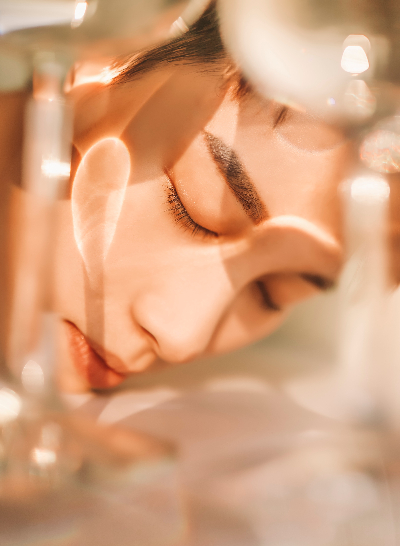
Rather than overriding the body’s natural signals with synthetic paralytics, acupuncture invites a dialogue with our own biology. It is a slow beauty movement in its purest form—a holistic, sustainable alternative that doesn't just mask the passage of time but nourishes the skin from the inside out. By treating the face as a map of our internal wellbeing, we can achieve a radiance that feels less like a clinical procedure and more like a homecoming.
At its heart, beauty acupuncture is about working with your body, not against it. It’s rooted in traditional Chinese medicine, where thousands of years of experience meet a holistic view of what it means to be radiant. Cosmetic acupuncture isn’t just poking needles into your face; it’s a way of encouraging your own natural systems to kick into gear — boosting circulation, increasing collagen production and redistributing energy so your skin looks fresh and alive.
With tiny, ultra-fine needles placed at carefully chosen points on your face and body that help awaken the glow you already have. Acupuncture helps ease tension in overworked muscles and gently tone the ones that have grown a bit lax over time. It encourages your body’s repair mechanisms to get to work.
Many people describe the experience not as a quick fix, but as a renewal. After a course of sessions you might notice a brighter complexion, smoother skin texture, softening of fine lines. These changes build slowly and beautifully over time, rather than appearing suddenly and artificially.
But the benefits aren’t just skin-deep. Because this practice considers your whole body , including stress levels, circulation and energy balance. Many women find they sleep better, feel calmer and even notice improvements in digestion and mood as their treatments progress.
For anyone who have always preferred natural methods, and who think beauty should harmonise with health rather than override it, acupuncture has become a quiet but potent favourite. Whether you’re curious about reducing signs of ageing, improving skin tone, or simply want to invest in your overall wellbeing in a way that shows on your face and beyond, this is a rhythm worth exploring.
In acupuncture, we don’t just focus on needles placed directly on the face based on facial nerve and muscle anatomy or the classic meridian pathways; practitioners also use distal points, locations on hands, feet or elsewhere on the body — to help balance and regulate your overall bodily functions. These remote points connect through the body’s network of meridians, supporting systemic circulation, energy flow and internal harmony, which in turn can enhance the effects of facial treatments and help the whole body function in a more balanced way. Here are some commonly used point combinations in acupuncture beauty treatments:
ST 36: Clinical studies demonstrate that stimulating ST36 significantly enhances facial microcirculation, notably increasing skin temperature in areas such as the cheeks and forehead, which facilitates the delivery of oxygen and nutrients to the skin,. Furthermore, ST36 possesses potent anti-inflammatory properties, making it highly effective for treating dermatological conditions like acne and allergic dermatitis.
LI 4 and LR 3: The points LI4 and LR3 are frequently paired together, a combination known as the Four Gates, to facilitate the systemic movement of Qi and Blood. LI4, located on the hands, is the command point for the face and is vital for regulating inflammation and assisting in detoxification. This point is particularly effective for treating skin conditions such as acne and promoting a healthy complexion by enhancing local blood supply to the facial tissues.
LR3, located on the feet, supports liver function to detoxify excess hormones, which is essential for managing hormonal acne and internal imbalances. Together, this dynamic duo addresses stagnation throughout the body, helping to revitalise the skin, diminish fine lines, and cultivate a youthful glow.
GB20: Biomechanically, chronic neck tension in the suboccipital region can restrict lymphatic drainage and oxygen supply, physically pulling facial tissues downwards and contributing to sagging, puffiness, or tension face. Acupuncture at this point targets the vertebral artery and the suboccipital muscle group, which has been shown to accelerate blood flow and improve vertebrobasilar circulation, effectively enhancing the delivery of nutrients to the head and face.
For those who love the idea of ageing with intention and authenticity, acupuncture offers something that feels refreshingly real: beauty that begins from within and grows outward.
Wang, Z., Yi, T., Long, M., Gao, Y., Cao, C., Huang, C., Wang, Q., Yin, N., & Chen, Z. (2017). Electro-acupuncture at zusanli acupoint (ST36) suppresses inflammation in allergic contact dermatitis via triggering local IL-10 production and inhibiting p38 MAPK activation. Inflammation, 40(4), 1351–1364. https://doi.org/10.1007/s10753-017-0578-5
Yang, Y., Ji, L., Li, G., Deng, X., Cai, P., & Guan, L. (2012). Differences in thermal effects of moxibustion at zusanli (ST 36) and hegu (LI 4) on various facial areas in healthy people. Journal of Traditional Chinese Medicine, 32(3), 397–403. https://doi.org/10.1016/s0254-6272(13)60045-x
Zhang, Y., & Wang, L. (2025). Research advances in acupuncture cosmetology. Advances in Clinical Medicine, 15(11), 1854–1858. https://doi.org/10.12677/acm.2025.15113292
Beijing Tong Ren Tang. (2025, February 17). Acupuncture for hormonal acne: Does it work? https://beijingtongrentang.ae/acupuncture-for-hormonal-acne-does-it-work/
Haghir, H., Yazdanpanah, M. J., Farahmand, S. K., Khadem‐Rezaiyan, M., & Azizi, H. (2025). Is acupuncture effective in diminishing frown lines? Evidence from a randomized controlled trial. Journal of Cosmetic Dermatology, 24(4), e70144. https://doi.org/10.1111/jocd.70144
LaCova-Bhat, L. (2017). Facial acupuncture & facial rejuvenation. International Journal of Complementary & Alternative Medicine, 6(6), 312–314. https://doi.org/10.15406/ijcam.2017.06.00205
Yin Yang House. (n.d.). LI 4 Union Valley - He Gu - 合谷. https://yinyanghouse.com/acupuncturepoints/li4/
Kwok, T. M., So, Y. C., & Dai, Z. Y. (2024). The effect of self-myofascial release method on the suboccipital muscle group in the treatment of cervicogenic headache. Journal of Alternative, Complementary & Integrative Medicine, 10, 489. https://doi.org/10.24966/ACIM-7562/100489