Just after Christmas, many people may no longer be sitting at the dining table, yet their stomach still feels as if it is working overtime: upper abdominal bloating, constant belching, acid reflux, nausea, and even a bit of diarrhoea. Most of the time, this is not a serious illness, but simply the result of a few festive meals that were too rich, too fast, or too late, leaving the digestive system overloaded. You do not need to treat yourself like a patient. With a few everyday adjustments, together with simple acupressure on three key points, you can usually ease that blocked, churning feeling little by little.
Start by avoiding the most common pitfalls. When people feel uncomfortable, their first instinct is often to gulp down a glass of iced water, lie flat scrolling on their phone, or keep drinking coffee to stay alert. These habits can make reflux more obvious and leave bloating harder to shift. What suits the post-holiday body better is something warmer and slower: warm water, peppermint tea, or ginger tea are all fine, taken in small amounts more often. After eating, do not lie down straight away. Even if you simply tidy the kitchen, walk around the house, or take a gentle 15-minute walk outside, it is enough as long as you start to feel slightly warm. And there is no need to force a heavy next meal for the sake of it. Clear soups, porridge or oats, bananas, toast, steamed or boiled protein, and vegetable soups—foods that do not add extra strain—are often more helpful than any quick fix.
If what you are feeling is mainly that uncomfortable fullness and pressure, you can add acupressure. It is simple, quiet, and needs no equipment—you can do it sitting on the sofa. The sensation does not need to be intensely painful; a comfortable ache, warmth, and a gradual softening are enough. Press each point for five to ten minutes, once or twice a day.
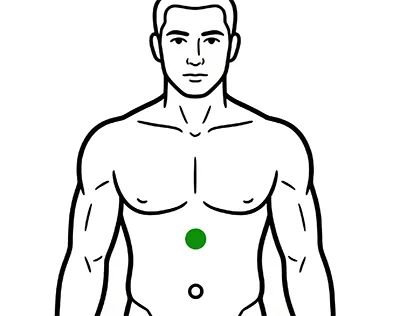
The first point to remember is Zhongwan (CV12). It is like a regulator for the upper abdomen and is useful for that post-meal feeling of a tight blockage beneath the chest, along with belching, reflux, and poor appetite. Finding it is straightforward: place your palm flat above the navel; about one palm’s width up, near the midline of the body, is Zhongwan. You do not need to poke for a pin-point spot. Use the heel of your palm to cover the area and massage slowly in a clockwise direction. Start with five minutes. If the upper abdomen feels less tight than before and your breathing feels easier, it is doing its job.
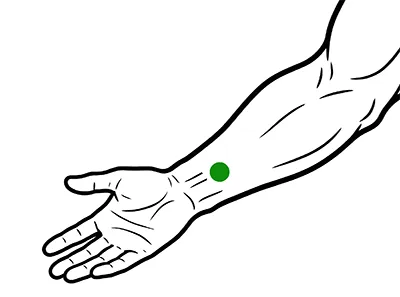
The second is Neiguan (PC6), which is especially suitable if you feel nauseous, on the verge of vomiting, or keep tasting acid in the back of your throat after the holidays. Neiguan is on the inner forearm: with the palm facing up, find the wrist crease and measure about three finger-widths above it, in the depression between two tendons. Press straight in with your thumb—do not use brute force. Stop at a clear, comfortable ache and knead the point for five to ten minutes. Many people find that the rising sensation in the chest gradually settles and the nausea eases.
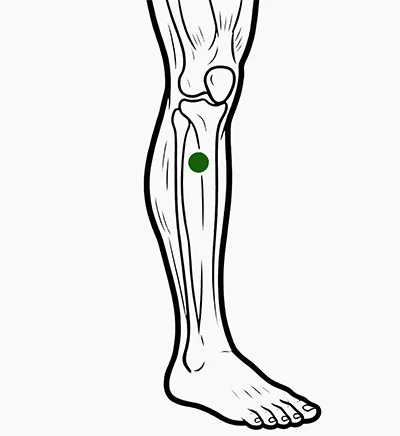
The third is Zusanli (ST36), which suits the situation where you have eaten a lot, nothing seems to be moving, your stomach feels bloated, and you feel a bit heavy and tired overall. It sits on the outer lower leg, not far below the knee. To locate it, feel along the bony edge on the outside of the knee, then measure four finger-widths down. Press along the area next to the outer side of the shin bone; you will often find a spot with a distinct achy, responsive sensation—this is Zusanli. Massage with the thumb for five to ten minutes, and do both legs for a more complete effect. Zusanli does not always feel like it stops reflux instantly; rather, it can make digestion feel as though it has regained momentum, with the bloating and heaviness gradually dispersing.
After the holidays, the most effective recovery is often refreshingly simple: keep the body a little warmer, move a little more, and eat a little more plainly. Acupressure is a gentle support—it does not need to feel like a treatment so much as a way of giving your gut a bit of patience. Doing it for a day or two usually helps clear the lingering post-festive discomfort. There are situations where this should not be treated as a simple post-holiday self-care tip. If you have underlying conditions such as gallstones or high triglycerides and develop marked upper abdominal pain after overeating, this is more suggestive of an acute problem that needs prompt attention, and it is not something to push through with only acupressure and rest.