The Nanjing and Its Foundational Role in Pulse Theory
The Huangdi Bashiyi Nanjing (The Yellow Emperor’s Classic of Eighty-One Difficult Issues), commonly known as the Nanjing, is regarded, together with the Huangdi Neijing, the Treatise on Cold Damage and Miscellaneous Diseases, and the Divine Farmer’s Materia Medica, as one of the four great classics of ancient Chinese medicine. The text contains only eighty-one “difficult issues”, yet its language is concise and its scope extensive, encompassing essential theories of pulse diagnosis, the Zang-fu organs, Yin–Yang, the Five Phases, nutritive and defensive qi, transport points, and acupuncture. It represents a systematic elucidation and synthesis of the difficult and essential points of the Neijing.
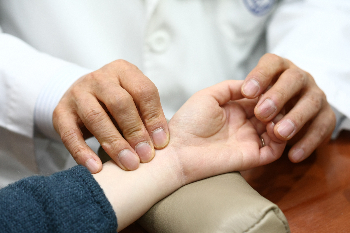
As Chinese medical theory became increasingly complex and fragmented after the Nanjing, anyone seeking to trace its roots and to gain a comprehensive understanding of ancient medical principles must return to this text. As a foundational classic, the Nanjing made an outstanding contribution to the development of pulse studies. It proposed the classification and clinical application of the twenty-four pulse qualities, exerting a profound influence on later pulse diagnosis. For example, the very first difficult issue discusses the importance of the cun-kou (wrist) pulse, establishing the principle that exclusive examination of the cun-kou may be used to determine the life, death, fortune, and misfortune of the five Zang and six Fu organs. In this sense, the Nanjing both inherited and further developed the pulse theories of the Neijing era, laying a solid theoretical foundation for Chinese pulse diagnosis.
The Renying–Qikou Pulse Method
The renying–qikou pulse diagnostic method originates from the classical pulse techniques recorded in the Lingshu section of the Huangdi Neijing. Chapters such as Zhongshi describe palpating the strongest pulsation of the carotid arteries on both sides of the laryngeal prominence in the neck, known as the renying pulse position, while palpating the radial artery at the wrist (the Cun-kou) on the forearm, known as the Qikou or Maikou. By comparing the relative strength and weakness of the pulses at these two sites, one can assess deficiency or excess in the channels, regulate yin and yang, and determine the location of pathogenic factors.
The Lingshu clearly states that the Qikou reflects yin, while the Renying reflects yang: the Cun-kou pulse mirrors the Yin Qi of the five Zang organs, whereas the Renying pulse reflects the Yang Qi of the six Fu organs at the body surface. On this basis, the ancients established diagnostic rules: when the renying pulse is stronger than the qikou, the condition is classified as an external disorder; when the qikou pulse is stronger than the renying, it is an internal disorder. A stronger renying (superficial position) pulse indicates externally contracted pathogenic factors, whereas a stronger qikou (interior position) pulse suggests internal damage and miscellaneous diseases.
This comparative pulse method was widely used during the Han dynasty and was considered effective in distinguishing whether the disease originated externally or internally, thereby facilitating the regulation of Yin–Yang balance. In a healthy state, the renying and cun-kou pulses correspond harmoniously, like the two ends of a rope moving together; lack of correspondence between them indicates Yin–Yang disharmony. Thus, the renying–qikou pulse method represents an ancient diagnostic approach based on comparing pulse qualities at specific sites on the left and right sides of the body to investigate disease mechanisms.
Renying–Qikou Pulse-Form Diagnosis
Medical texts of the Jin and Yuan periods, such as the Maijing and Treatise on Classified Patterns of Cold Damage, record the Renying–Qikou diagnostic method. In this approach, the pulse position one cun anterior to the guan on the left wrist is designated as the renying position, while the corresponding position on the right wrist is designated as the Qikou position. By palpating the pulsations at these two sites and comparing left–right differences, the practitioner infers the underlying disease mechanism.
In the diagnostic process, causes of disease are divided into internal and external factors: the left renying pulse reflects externally contracted causes, while the right qikou pulse reflects internally generated causes. Differences between the two pulse presentations are analysed to identify specific pathogenic categories, on the basis of which points are selected and treated with acupuncture or moxibustion.
The Qikou Nine-Pathway Pulse Method – Transmission and Refinement of Extraordinary Vessel Pulse Diagnosis
The Qikou nine-pathway pulse method can be traced back to theories from the time of the Huangdi Neijing and was discussed in Wang Shuhe’s Maijing during the Wei and Jin dynasties. Traditionally, the Cun-kou (Qikou) was regarded as the meeting place of the hundred pulses, implying that examination of this single site could encompass information from all channels. However, although the Neijing and Maijing proposed concepts such as the three positions and nine indicators and the nine pathways of the qikou, they did not provide detailed descriptions of how these nine pulse pathways manifest clinically.
Not until the Ming dynasty did the renowned physician Li Shizhen (style name Binhu) offer a comprehensive exposition of the Qikou nine-pathway pulse method in the concluding section of his Examination of the Eight Extraordinary Vessels. Li Shizhen stated that the single Qikou pulse is divided into nine pathways, governing the twelve regular channels and the eight extraordinary vessels; each has its own diagnostic method—this is the secret transmission from Qibo to the Yellow Emperor. He believed that although the three-position method had been transmitted, the nine-pathway pulse had been lost, and he therefore systematised and described it himself, bringing this special method back into circulation.
Li Shizhen subdivided the pulse at the Cun-Kou into nine pathways—anterior, posterior, left, right, upper, lower, and central—corresponding to pathological changes in the twelve regular channels and the eight extraordinary vessels. He successfully delineated the specific characteristics of these nine pulse pathways, making public what had once been esoteric diagnostic knowledge. For example, he classified pulse qualities into three groups: seven exterior pulses (Yang), including floating, hollow, slippery, full, wiry, tight, and surging; eight interior pulses (Yin), including faint, deep, moderate, rough, slow, hidden, soggy, and weak; and nine pathway pulses, encompassing both yin and yang, including long, hurried, short, empty, knotted, firm, moving, fine, and intermittent. By identifying these pulse qualities at the cun-kou, one can judge whether there is obstruction in the channels involved, particularly in the extraordinary vessels.
Because few physicians in successive generations addressed extraordinary-vessel pulse diagnosis, Li Shizhen’s work filled a major gap and provided valuable guidance for later scholars. Unfortunately, after the Qing dynasty the clinical application of the qikou nine-pathway pulse method became rare, and it was not until modern times that it regained attention within the fields of Chinese medicine and acupuncture. Some scholars, based on textual research, have attempted to verify its clinical usefulness in locating disease, suggesting that this method has unique value in assessing channel obstruction and disturbances of qi and blood. Overall, the qikou nine-pathway pulse method embodies the ancient pulse-studies principle of “measuring the many through the one”: by subdividing the single cun-kou pulse into nine pathways, one gains insight into systemic yin–yang and channel dynamics, making it particularly significant for complex conditions involving yin–yang imbalance and channel obstruction.
Six-Position Locational Pulse Diagnosis
The six-position locational pulse method is based on classical cun-kou pulse diagnosis, which divides the radial artery at the wrist into three positions on each hand. By comparing the relative strength of the six pulse positions, the practitioner infers the waxing and waning of the zang-fu organs and channels. In practice, the patient and practitioner sit facing each other. The practitioner places the middle finger on the radial artery just medial to the radial styloid process, with the index finger and ring finger positioned anteriorly and posteriorly to perceive the cun, guan, and chi pulses respectively.
This method is combined with superficial and deep palpation. For example, on the left hand, superficial palpation of the cun, guan, and chi reflects the Small Intestine, Gallbladder, and Bladder channels, while deep palpation reflects the Heart, Liver, and Kidneys. On the right hand, superficial palpation reflects the Large Intestine, Stomach, and Triple Burner, while deep palpation reflects the Lung, Spleen, and Pericardium (or Gate of Life). By comparing the relative strength of the six pulse positions, one can determine which zang-fu or channel is relatively deficient.
This diagnostic method is known as six-position locational diagnosis. It is rooted in the Nanjing and was further supplemented by Wang Shuhe’s cun-kou positional theory in the Maijing. Yin–yang, deficiency–excess, and Five-Phase generation and control theories are integrated into pulse diagnosis: by comparing the strength of the six pulses, the practitioner determines relative deficiency or excess of the five zang and six fu organs and applies tonifying or reducing techniques accordingly to support the upright qi and dispel pathogenic factors.
In clinical channel-based treatment, practitioners typically follow the sequence of “first diagnosing the pulse, then prescribing, and finally re-examining the pulse”. The six-position pulse diagnosis is first used to identify the principal disease mechanism (deficiency is tonified, excess is reduced). After selecting and needling the appropriate points, the pulse is palpated again to confirm changes and thereby assess therapeutic effectiveness.
Throughout the long history of TCM, Chinese pulse diagnosis and acupuncture have given rise to multiple pulse diagnostic traditions. From the comparative methods of the Neijing and Nanjing periods—such as the three positions and nine indicators, and the Renying Cun Kou approach, to Wang Shuhe’s synthesis of the twenty-four pulse qualities in the Jin dynasty, and finally to Li Shizhen’s refinement of the nine-pathway pulse diagnosis for the extraordinary vessels in the Ming dynasty, the ancient pulse system became increasingly sophisticated.
Using the pulse for diagnosis and the needle for treatment, the origins and development of pulse-guided acupuncture constitute an intellectual history spanning antiquity to the present. Guided by classical theory, the integrated development of pulse diagnosis and acupuncture continues to expand, and there is good reason to expect that this ancient essence will display renewed vitality in the modern era.