Chronic obstructive pulmonary disease, or COPD, is a heterogeneous lung condition characterised by persistent airflow limitation caused by abnormalities of the airways and or alveoli. It is now among the leading causes of death worldwide, and its long course with recurrent exacerbations makes long-term management difficult. Even in the stable phase, many patients experience breathlessness and reduced activity tolerance, so prevention and maintenance at this stage focuses on easing symptoms and improving cardiopulmonary function. Cardiorespiratory fitness has become an important marker in respiratory and cardiovascular disease because it reflects the body’s integrated capacity to take up, transport and utilise oxygen for work, and it has meaningful prognostic value. Exercise training is widely regarded as the best way to improve cardiorespiratory fitness, yet COPD often limits how much patients can train, how well they tolerate intensity, and how safely the workload can be controlled. That tension creates a practical need for interventions that are both effective and easier to dose.
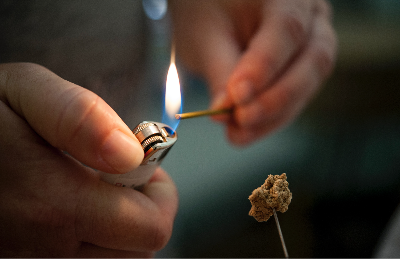
One study published in Chinese Acupuncture and Moxibustion in 2025 set out to examine whether moxibustion on the DU meridian could improve cardiorespiratory fitness in patients with stable COPD diagnosed with the lung and kidney qi deficiency pattern. Forty patients were randomly assigned to an observation group or a control group. The control group received routine standard care and nursing, while the observation group received duzhong moxibustion in addition to the same baseline care. The intervention was applied along the Governing Vessel from Dazhui to Yaoshu, once a week for eight weeks, with each session lasting one hour. Outcomes were assessed before and after treatment and included maximal oxygen uptake, the six-minute walk test together with Borg exertion scores, pulmonary function indices including forced expiratory volume in one second, forced vital capacity, and the ratio of forced expiratory volume in one second to forced vital capacity, as well as the COPD Assessment Test score and a traditional Chinese medicine syndrome score.
After eight weeks, both groups showed improvement compared with baseline: maximal oxygen uptake increased, the six-minute walk distance improved, and pulmonary function indices rose, while Borg exertion scores, COPD Assessment Test scores, and traditional Chinese medicine syndrome scores decreased. What distinguished the groups was the size of change. The observation group outperformed the control group across key measures, with higher maximal oxygen uptake, better walking performance, and more favourable lung function values, alongside lower perceived exertion and lower symptom burden scores. Taken together, these findings support the idea that adding duzhong moxibustion to routine management can strengthen exercise tolerance while easing the day-to-day load of symptoms during the stable phase.
From a traditional Chinese medicine perspective, COPD aligns with categories such as lung distension, wheezing disorder, and cough, and is typically described as root deficiency with branch excess, centred in the Lung and closely linked to the Spleen and Kidney, with lung and kidney qi deficiency common in the stable stage. Reduced cardiorespiratory fitness presents clinically as a deficiency pattern closely tied to the state of qi and blood. As COPD progresses, prolonged consumption of lung qi weakens the Lung’s dispersing and descending functions; when lung qi is insufficient, it cannot effectively drive the circulation of blood, contributing to internal obstruction by phlegm and stasis and ultimately lowering exercise capacity. The therapeutic logic therefore prioritises supplementing the Lung and Kidney and harmonising qi and blood. The study authors interpret the superior outcomes in the moxibustion group as consistent with warming and supporting yang, promoting qi and blood circulation, and strengthening Lung and Kidney functions through treatment along the Governing Vessel. They also discuss plausible biomedical pathways, including modulation of inflammatory mediators, mitigation of airway inflammation and remodelling, and improved oxygen utilisation. The combined warming effects of moxa and ginger, together with enhanced local circulation, may also support skeletal muscle endurance and raise the threshold for fatigue during activity, which fits the observed gains in walking performance and reduced exertion.