In today’s high-pressure, fast-paced lifestyle, many people unconsciously frown again and again, and over time glabellar lines become one of the most common and noticeable wrinkles in the upper third of the face. From the perspective of facial acupuncture, these lines are not only a sign of skin ageing but also a visible reflection of long-term stress, fatigue and emotional tension. Glabellar lines may appear vertical, horizontal or slightly oblique, depending on the dominant activity of the frowning muscles and depressor muscles. This is why facial acupuncture, which looks beyond the skin surface and considers muscular and systemic factors, is increasingly discussed in relation to natural facial rejuvenation.
Minimally invasive cosmetic approaches such as botulinum toxin injections are widely used to treat glabellar lines. They are relatively quick to act and technically straightforward, offering short-term muscle relaxation. However, these methods are not without drawbacks. Eyebrow drooping, facial asymmetry and a frozen or unnatural expression may occur, meaning that the intended youthful effect can sometimes feel less natural. As a result, more attention has turned towards gentler and more holistic alternatives. Acupuncture has re-emerged in this context not as a method that suppresses facial movement, but as one that seeks to restore balance in the body and allow facial expressions to soften naturally.
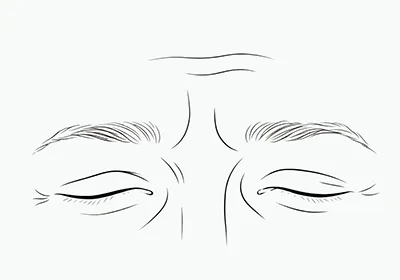
From a traditional Chinese medicine perspective, the face is never regarded as an isolated area. Facial appearance is seen as an outward expression of the internal organs, the flow of Qi and blood, and the emotional state. Acupuncture is rooted in a holistic approach, based on the idea that local concerns can only truly improve when the whole body is brought back into balance. In facial rejuvenation, this means that acupuncture does not focus solely on a single wrinkle, but also considers sleep quality, emotional stress, digestion and pain, all of which influence Qi circulation. In clinical practice, local and adjacent facial points are used to act directly on the skin, fascia and facial muscles, while body points are selected to regulate the nervous system, endocrine function and overall vitality. Because of this inside-out approach, acupuncture is often viewed as a more sustainable and long-term method of facial rejuvenation. Although earlier studies in cosmetic acupuncture were limited and often focused on the lower two-thirds of the face, this randomised controlled study on glabellar lines provides more robust evidence for its effectiveness.
In one study, participants in the intervention group received combined facial and body acupuncture over several weeks. Body points included LR3 (Taichong), ST36 (Zusanli), SP9 (Yinlingquan), SP10 (Xuehai), LI4 (Hegu), LU7 (Lieque), PC6 (Neiguan), LI11 (Quchi) and DU20 (Baihui), which are commonly used to regulate Qi and blood, relieve tension and reduce pain. Facial points included BL2 (Zanzhu), Ex-HN4 (Yuyao), TB23 (Sizhukong) and Ex-HN3 (Yintang), directly targeting the muscles involved in frowning. Results showed clear improvement in glabellar lines at both rest and maximum frowning at week 7 and week 12 in the intervention group, while the control group showed almost no change. Importantly, these improvements were maintained during follow-up, participant satisfaction remained high, and no serious adverse events were reported, highlighting the good safety profile of acupuncture.
What’s nice is that acupuncture helped with more than just softening wrinkles. The study found improvements in quality-of-life measures, particularly in physical comfort and social functioning. On one level, this is closely linked to pain and tension relief. Points such as LR3, ST36, LI4 and LI11 are well known for their effects on pain modulation and nervous system regulation, and as bodily discomfort decreases, facial muscles naturally relax, reducing dynamic frown lines. On another level, psychological changes play an important role. As glabellar lines soften, facial expressions appear gentler, people tend to smile more easily and feel more confident in social interactions. This increased confidence can reduce self-consciousness about appearance and encourage more relaxed communication. Over time, this positive emotional shift may further reduce habitual frowning, creating a beneficial feedback loop. Compared with treatments that aim for immediate results at the cost of natural expression, acupuncture supports a more harmonious improvement of both appearance and wellbeing.
The effects of acupuncture on glabellar lines operate on several interconnected levels. Intradermal needling and stimulation of facial points such as BL2, TB23, Ex-HN3 and Ex-HN4 can induce mild local responses that promote the release of growth factors and activate fibroblasts, supporting collagen synthesis and remodelling. At the same time, local nerve activation triggers axon reflexes, leading to vasodilation and increased blood flow, which creates a favourable environment for skin repair. At the muscular level, needling the corrugator and depressor muscles helps release chronic contraction and spasm, reducing the muscle shortening that contributes to dynamic wrinkles. When combined with the regulatory effects of body acupuncture on the autonomic nervous system, including improvements in skin hydration and oil balance, glabellar lines can gradually soften over time. This gentle, physiological and progressive process is precisely what makes acupuncture so valuable in natural facial rejuvenation.